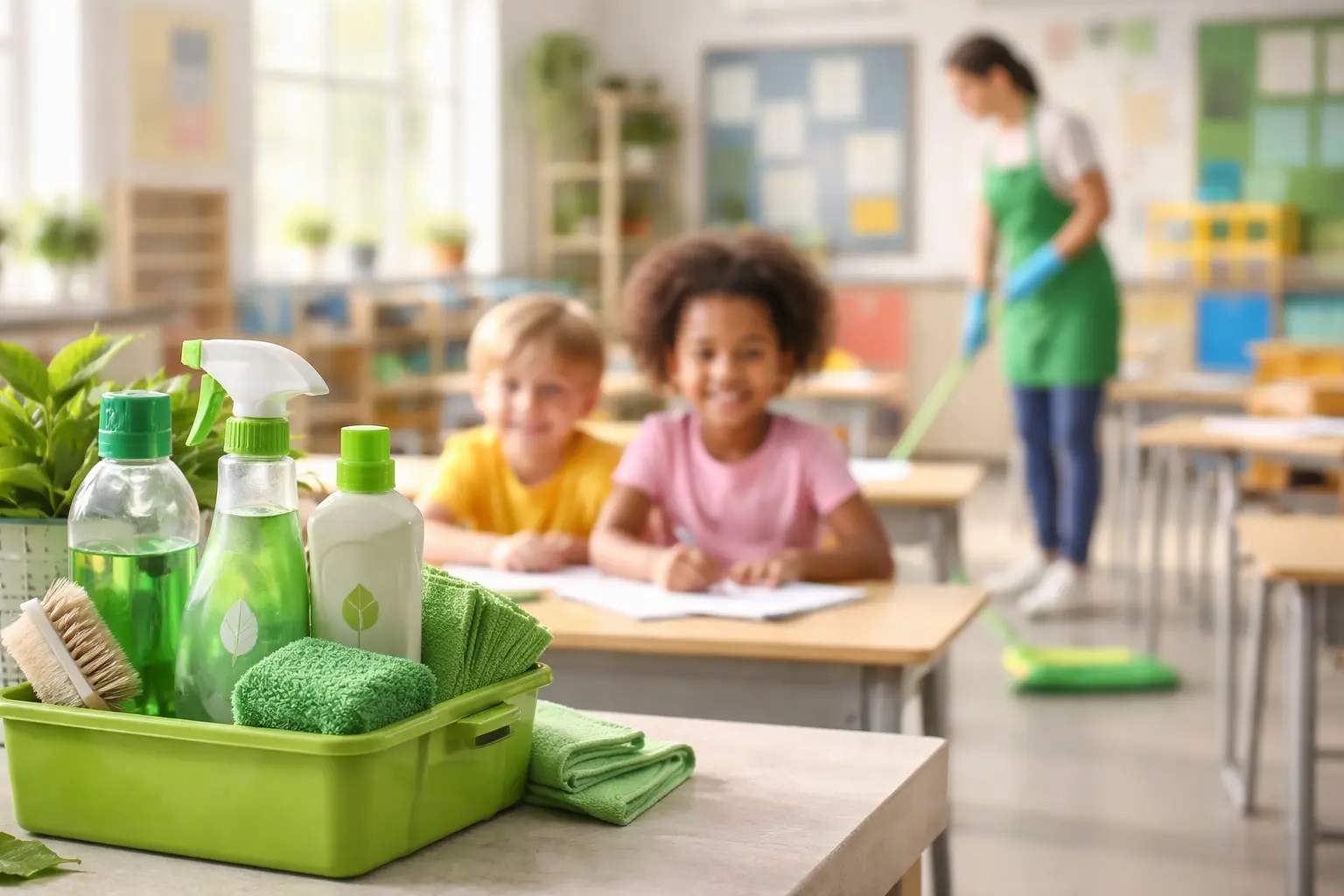
Eco-Friendly Cleaning Protects children by lowering contact with harsh chemicals and by improving indoor air quality. NJ Schools serve large groups of students each day. Children spend many hours in classrooms, gyms, cafeterias, and buses. Cleaning Protects health when staff use safe products and clear methods. Eco-Friendly Cleaning uses products with low toxicity and clear labels. These products reduce exposure risks for students, teachers, and staff. NJ Schools also face rules on safety and hygiene. Eco-Friendly Cleaning supports these rules through safe practices and clear results.
This article explains how Eco-Friendly Cleaning Protects children in NJ Schools. The focus stays on health, learning, safety, and daily operations. Each section uses clear language and direct points.
Why Children Need Safer Cleaning in NJ Schools
Children breathe faster than adults. Children touch surfaces often. Children place hands near mouths and eyes. These actions raise exposure risk from chemical residue. Traditional cleaners may release fumes that irritate lungs and skin. Some cleaners leave residue on desks, toys, and floors. Cleaning Protects children when schools remove these risks.
NJ schools serve students who often struggle with asthma and seasonal allergies, making indoor air quality and surface safety a daily priority. Strong fragrances and harsh chemical agents can easily trigger symptoms, disrupt learning, and create discomfort. Eco-friendly cleaning practices help reduce these risks by relying on low-odor products made with simpler ingredients and controlled application methods. This approach supports healthier classrooms and consistent daily comfort, especially when implemented by experienced Cleaning Services in NJ that understand local school requirements and environmental standards.
Schools also prepare and serve meals on site, which makes sanitation in cafeterias and food-handling areas especially critical. Eco-friendly cleaning methods help maintain strict hygiene without leaving behind harmful residues on tables, counters, or preparation surfaces. By using safer cleaning solutions, schools can support food safety, meet state compliance guidelines, and create a cleaner environment for both students and staff.
How Eco-Friendly Cleaning Protects Health
Eco-Friendly Cleaning Protects health by limiting harmful exposure. Products avoid chlorine, ammonia, and heavy solvents. These chemicals can irritate skin and lungs. Safer products rely on plant-based agents and simple surfactants. These agents break down dirt and germs without strong fumes.
Air quality improves when schools use low-odor products. Classrooms keep fresh air without lingering smells. Teachers report fewer headaches. Students show fewer coughs and eye issues. Cleaning Protects learning by reducing distractions from discomfort.
Skin contact also matters. Children sit on floors and touch desks. Eco-Friendly Cleaning reduces residue that may cause rashes. Staff rinse and wipe surfaces with clear steps. These steps lower contact risk and support daily comfort.
The Role of Indoor Air Quality in NJ Schools
Indoor air quality affects focus and attendance. Poor air can cause fatigue and breathing issues. NJ Schools aim to keep air clean during class hours. Eco-Friendly Cleaning supports this goal.
Products release fewer volatile compounds. These compounds can linger in closed rooms. Custodial teams clean after hours or during low traffic times. Ventilation supports quick air exchange. Cleaning Protects air by limiting chemical load.
Air quality also links to illness spread. Clean surfaces reduce germ transfer. Safe products still meet disinfection needs. Schools follow guidance for dwell time and coverage. This balance keeps rooms clean and air safe.
Cleaning Protects Learning and Attendance
Healthy students attend school more often. Fewer sick days support steady learning. Eco-Friendly Cleaning Protects attendance by reducing irritation and illness risk.
Students concentrate better in clean spaces. Clear air supports attention. Clean desks support hygiene. Teachers spend less time managing discomfort. Schools see smoother routines.
Parents also value safe practices. Clear policies build trust. NJ Schools that use Eco-Friendly Cleaning show care for children. This trust supports community ties and school choice.
How Eco-Friendly Cleaning Supports Allergy and Asthma Care
Allergies and asthma affect many students. Dust, mold, and residue can trigger attacks. Eco-Friendly Cleaning focuses on prevention.
Products clean without strong scents. Staff use microfiber cloths to trap dust. Floors receive regular care to limit particles. HVAC vents stay clear through safe cleaning steps. Cleaning Protects breathing by lowering triggers.
Schools also train staff on proper dilution. Overuse of any product can cause issues. Clear training keeps use safe and effective. This practice supports daily care for sensitive students.
Compliance and Safety Standards in NJ Schools
NJ Schools follow state and federal safety rules. Cleaning Protects compliance when schools choose approved products. Eco-Friendly Cleaning products often meet third-party standards. Labels show ingredients and use steps.
Custodial teams document cleaning schedules. Schools keep logs for audits and reviews. These records show safe practices. Eco-Friendly Cleaning supports clear reporting and accountability.
Safety training also matters. Staff learn proper storage and use. Products come with clear instructions. This clarity reduces spills and misuse.
Environmental Benefits That Support Student Health
Eco-Friendly Cleaning Protects the environment around schools. Wastewater carries fewer toxins. Grounds and nearby water stay cleaner. Students benefit from cleaner play areas.
Packaging also matters. Many products use refill systems. These systems cut plastic waste. Less waste supports cleaner campuses. Students learn by example through school actions.
Environmental care links to health. Clean surroundings support outdoor activities. Children enjoy recess without exposure to residue. This link supports daily wellness.
How Schools Implement Eco-Friendly Cleaning Programs
Schools start with product review. Teams select items with clear labels and safety data. They test products in small areas. Feedback guides wider use.
Training follows selection. Custodians learn steps for use, dilution, and storage. Teachers learn simple care tips for classrooms. Clear roles support smooth use.
Schedules also matter. Teams plan cleaning during low traffic times. Ventilation supports air flow. Cleaning Protects daily operations through planning and clarity.
Cost Control and Long-Term Value for NJ Schools
Some assume safer products cost more. Many Eco-Friendly Cleaning programs reduce costs over time. Concentrated products last longer. Refill systems cut waste.
Health benefits also save costs. Fewer sick days reduce substitute needs. Fewer complaints reduce response time. Cleaning Protects budgets through steady results.
Equipment also lasts longer. Gentle products reduce wear on floors and surfaces. Schools spend less on repairs. This value supports long-term planning.
The Role of Teachers and Staff in Daily Cleaning Care
Teachers support cleaning through simple steps. They encourage hand washing. They keep desks clear for cleaning. They report spills and issues.
Staff communication supports success. Clear signs explain cleaning schedules. Students learn routines and respect clean spaces. Cleaning Protects shared responsibility.
Schools also share updates with parents. Newsletters explain practices. This clarity builds trust and support.
Eco-Friendly Cleaning and Germ Control in NJ Schools
Germ control remains a priority. Eco-Friendly Cleaning still meets disinfection needs. Products target common pathogens with clear contact time.
Custodians follow step-by-step methods. They clean first, then disinfect. This order improves results. Cleaning Protects health through proper sequence.
Hand hygiene also plays a role. Clean surfaces support hand washing efforts. Together, these steps limit spread during school days.
Measuring Success and Continuous Improvement
Schools track results through attendance and feedback. They review air quality reports. They note nurse visits related to irritation.
Adjustments follow data. Teams refine products and schedules. Training updates keep staff informed. Cleaning Protects progress through steady review.
Community input also matters. Parents and teachers share observations. Schools respond with clear action. This cycle supports trust and safety.
Future Outlook for Eco-Friendly Cleaning in NJ Schools
Interest in Eco-Friendly Cleaning continues to grow. NJ Schools plan for safer practices. New products offer clear labels and strong performance.
Education supports this shift. Students learn about health and care through school actions. Cleaning Protects learning beyond the classroom.
As schools adopt safer methods, children gain daily protection. Clear air, clean surfaces, and safe products support health. Eco-Friendly Cleaning Protects children in NJ Schools through simple, direct, and proven steps.
 Every Thing Here