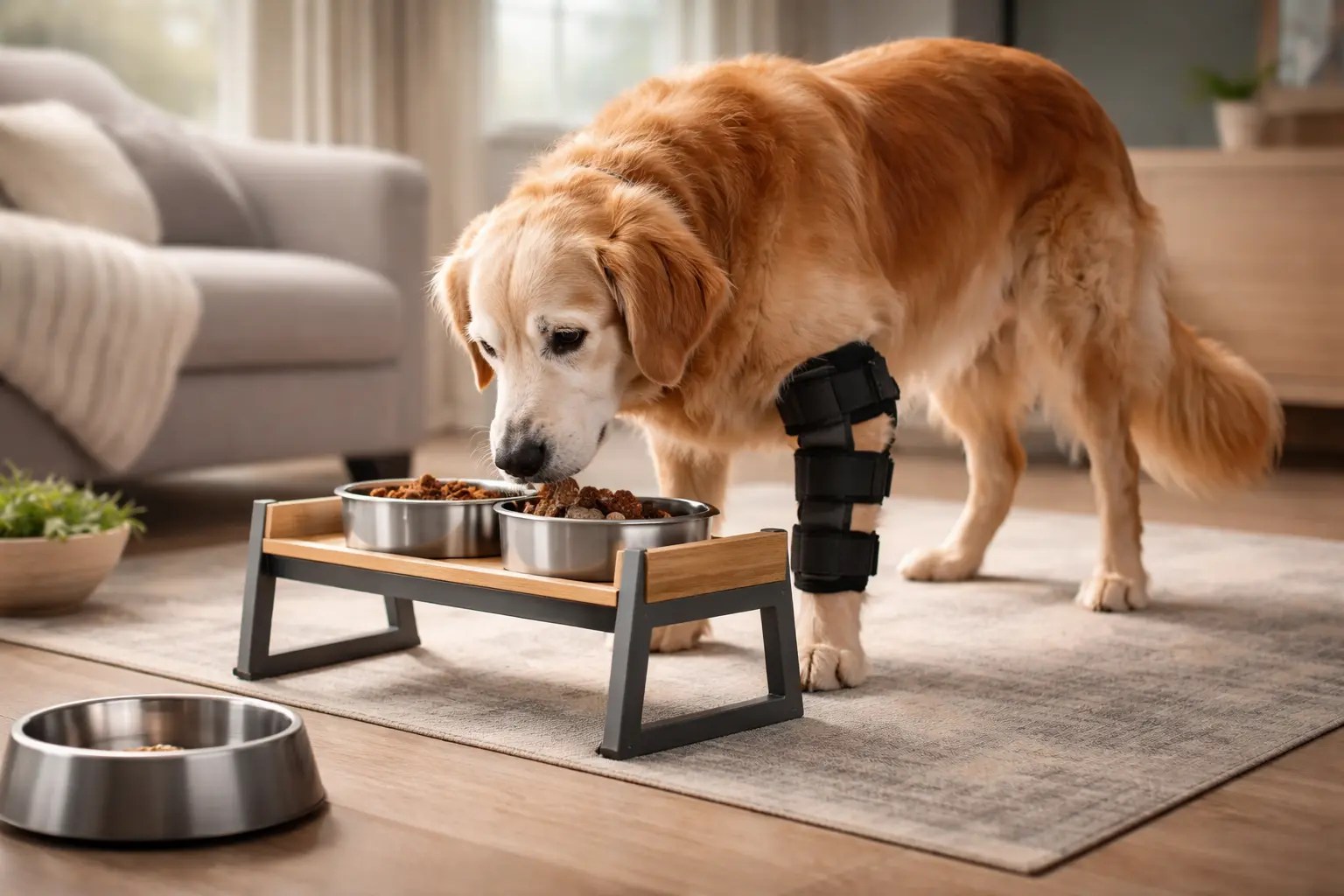
A feeding bowl affects how a dog stands, bends, and eats each day. Many owners focus on food quality, but bowl choice also plays a key role in comfort. Dogs with joint issues often feel pain in the hips, knees, elbows, or neck. The wrong feeding bowl can increase that pain. The right feeding bowl can reduce strain and support better posture.
Joint issues in a dog can result from aging, injury, excess weight, or conditions such as arthritis and hip dysplasia. These problems reduce flexibility and cause stiffness. When a dog lowers its head too far or spreads its legs to balance, the joints carry extra pressure. Over time, daily stress during meals can worsen discomfort.
This article explains how feeding bowl design, height, material, and placement affect dogs with joint issues. It also provides clear guidance on how to select the best feeding bowl for better comfort and mobility.
Understanding Joint Issues in Dogs
Joint issues affect movement and posture. A dog with joint issues often shows signs such as limping, slow rising, reluctance to climb stairs, and reduced activity. Pain increases when the dog bends or shifts weight unevenly.
Common joint conditions include arthritis, hip dysplasia, elbow dysplasia, and ligament injuries. Arthritis causes inflammation and stiffness. Hip dysplasia creates instability in the hip joint. These problems make simple actions like eating more difficult.
During feeding time, a dog usually lowers its head to floor level. This position requires neck flexion and weight transfer to the front legs. For a healthy dog, this action causes little stress. For a dog with joint issues, this posture can increase pressure on painful areas.
A proper feeding bowl reduces this strain. It allows the dog to eat with a more natural head and neck position. It also limits unnecessary joint movement.
How Feeding Bowl Height Impacts Joint Stress
Low Feeding Bowl and Increased Strain
A feeding bowl placed directly on the floor forces the dog to bend its neck and shoulders downward. This position shifts body weight forward, causing the front legs and shoulders to absorb more pressure. Dogs with elbow arthritis or shoulder pain may feel noticeable discomfort during meals, especially when this posture is repeated every day.
The neck also remains flexed for several minutes while eating. Prolonged flexion can increase stiffness in dogs with spinal or cervical joint issues. Large breed dogs often experience more strain because of their size, height, and body structure. Choosing a bowl that supports a more natural head and neck alignment can help reduce unnecessary stress on joints. Many pet owners now consider elevated and ergonomically crafted options such as Designer Dog Bowls by Supreme Dog Garage, which are designed to promote better posture while complementing modern home interiors.
Repeated stress during daily feeding can gradually worsen joint pain over time. A low feeding bowl may not support proper posture for dogs already dealing with arthritis or mobility challenges, making thoughtful bowl selection an important part of long-term joint care.
Elevated Feeding Bowl and Improved Posture
An elevated feeding bowl raises the food closer to the dog’s chest level. This setup allows the dog to keep its head in a neutral position. The neck remains straighter, and the spine stays aligned.
When the feeding bowl sits at the correct height, the dog places less weight on the front legs. This reduces pressure on painful joints. Dogs with hip or knee issues also benefit because they do not need to bend deeply.
The ideal feeding bowl height depends on the dog’s size. As a general guide, the top of the feeding bowl should align with the lower chest. The dog should not stretch upward or bend downward sharply.
Owners should measure the dog while it stands naturally. Proper height selection plays a key role in joint support.
Feeding Bowl Design and Stability
Wide Base and Non-Slip Features
A stable feeding bowl prevents sliding. When a feeding bowl moves across the floor, the dog must adjust its stance to follow the food. This movement increases joint stress.
Dogs with joint issues may struggle to maintain balance. A feeding bowl with a wide base and non-slip bottom reduces movement. Rubber grips or heavy materials help keep the bowl in place.
Stability reduces sudden shifts in body weight. This control protects painful joints and lowers the risk of falls.
Bowl Depth and Shape
The depth and shape of the feeding bowl also affect posture. A very deep feeding bowl may force the dog to push its head downward. A shallow but wide bowl allows easier access to food.
For dogs with neck stiffness, a shallow feeding bowl reduces excessive bending. Flat-faced breeds may also benefit from a wider shape that limits strain.
The goal is to allow smooth eating without awkward angles. Proper design improves comfort and reduces stress on joint structures.
Material Choice and Hygiene
Weight and Durability
Feeding bowl material influences both stability and hygiene. Stainless steel bowls often provide strong durability and enough weight to prevent sliding. Ceramic bowls can also offer stability if they have a solid base.
Light plastic bowls may shift easily. This movement can increase joint strain as the dog adjusts its position.
A heavier feeding bowl often supports better control and consistent posture.
Clean Surface and Health
Dogs with joint issues may have weaker immune systems due to age or chronic inflammation. A clean feeding bowl reduces exposure to bacteria. Stainless steel and glazed ceramic surfaces are easy to clean.
Owners should wash the feeding bowl daily. Clean surfaces prevent infections and support overall health. Good hygiene reduces additional health stress that could affect joint recovery.
Feeding Position and Body Alignment
Front Leg Support
When a dog eats, the front legs support most of the upper body. A proper feeding bowl height reduces excessive forward lean. The dog can distribute weight evenly across all four legs.
Even weight distribution lowers strain on the elbows and shoulders. Dogs with joint issues need balanced support to prevent flare-ups of pain.
Hip and Back Alignment
A dog with hip pain may avoid deep bending. If the feeding bowl sits too low, the dog may widen its stance. This posture increases pressure on the hips.
An elevated feeding bowl allows the dog to maintain a more natural stance. The spine remains straighter, and the hips stay in a stable position.
Correct alignment during feeding helps protect the lower back and hind legs.
Special Considerations for Senior Dogs
Senior dogs often experience joint issues due to aging. Cartilage wears down over time, and inflammation increases. These changes reduce flexibility.
A senior dog may hesitate before approaching a low feeding bowl. Owners should observe signs such as slow movement, stiffness after meals, or reluctance to eat.
An adjustable feeding bowl works well for senior dogs. Owners can modify height as the dog’s needs change. Regular veterinary checkups also help monitor joint health.
Soft mats under the feeding area can add comfort. A cushioned surface reduces pressure on paws and joints during meals.
Large Breeds and Joint Issues
Large breed dogs face higher risk of joint issues. Their body weight increases pressure on hips and elbows. Breeds such as German Shepherds, Labradors, and Great Danes often develop joint conditions.
A large dog requires a feeding bowl that matches its height and build. Floor-level bowls often create severe neck bending in large breeds. Elevated feeding systems usually provide better support.
Owners should ensure the feeding bowl stand remains stable. A weak stand can tip and create sudden movement. Strong construction supports safety and joint protection.
Signs That the Feeding Bowl Is Causing Discomfort
Owners should watch for clear signs during feeding time. A dog with joint issues may:
- Shift weight repeatedly
- Hesitate before lowering its head
- Eat slowly due to discomfort
- Avoid the feeding bowl
- Whine or show stiffness after meals
These signs may indicate that the feeding bowl height or design does not suit the dog’s needs.
Simple adjustments can improve comfort. Raising the feeding bowl slightly or switching to a stable model often makes a noticeable difference.
How to Choose the Right Feeding Bowl for a Dog With Joint Issues
First, measure the dog’s shoulder height while it stands naturally. Select a feeding bowl that allows the dog to eat without deep bending.
Second, choose a stable base with non-slip support. Prevent sliding to reduce joint strain.
Third, select a material that provides weight and easy cleaning. Stainless steel often works well.
Fourth, observe the dog during meals. Watch posture, balance, and comfort. Adjust the feeding bowl height if needed.
Fifth, consult a veterinarian for guidance if the dog shows ongoing pain. Joint issues may require medical treatment along with environmental adjustments.
Conclusion
Feeding bowl choice directly affects a dog with joint issues. Height, design, material, and stability all influence posture and comfort. A low feeding bowl can increase strain on the neck, shoulders, and hips. An elevated feeding bowl often supports better alignment and reduces joint pressure.
Dogs eat every day. Small stress during each meal can build into long-term discomfort. A proper feeding bowl supports balanced posture and protects sensitive joints.
Owners should observe their dog carefully and adjust the feeding bowl based on size and mobility. With the right setup, a dog with joint issues can eat comfortably and maintain better overall joint health.
 Every Thing Here